



UPDATE: Medical Journal of Europe is now partially indexed in Google Scholar.
ATUALIZAÇÃO: A Medical Journal of Europe agora está indexada no Google Acadêmico.

UPDATE: Temos opção de pagamento com Pix para autores brasileiros
UPDATE: It’s completely FREE of charge to submit manuscript.
NO PUBLISHMENT FEE.
Open Access Fee: $30 (or 159 Brazil Reals)
Med J Eur
Medical Journal of Europe
Peer reviewed partly-open access international journal for medical articles
Click for the 7th European Congress of Health Sciences
(Congress pages moved to: https://healthcongresses.com)

🔽 Latest Articles 🔽
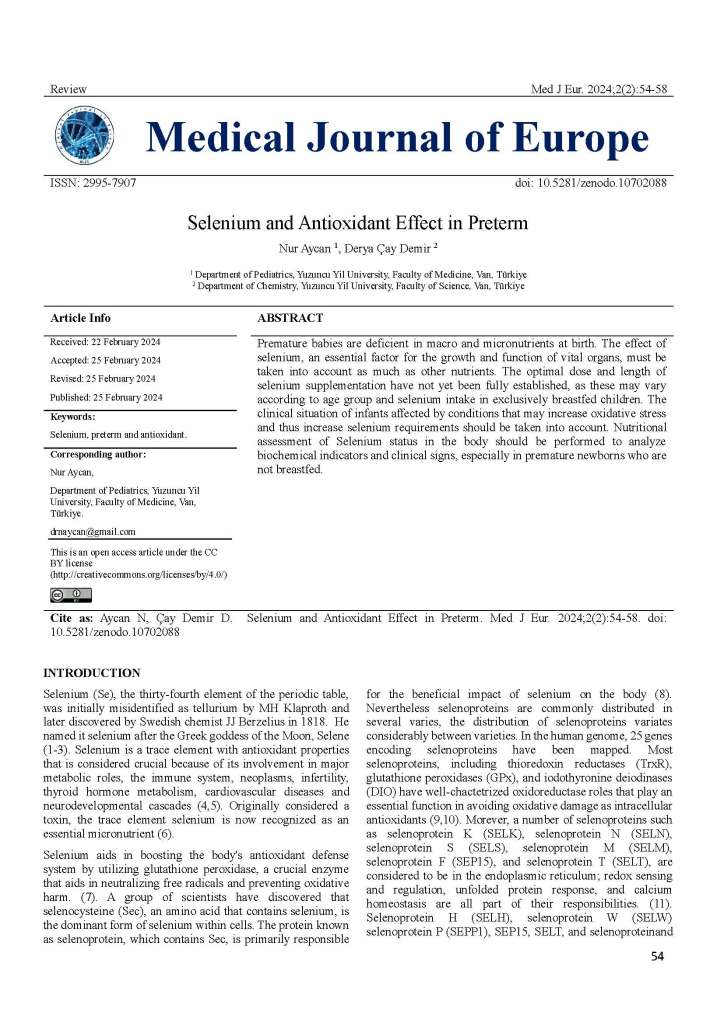
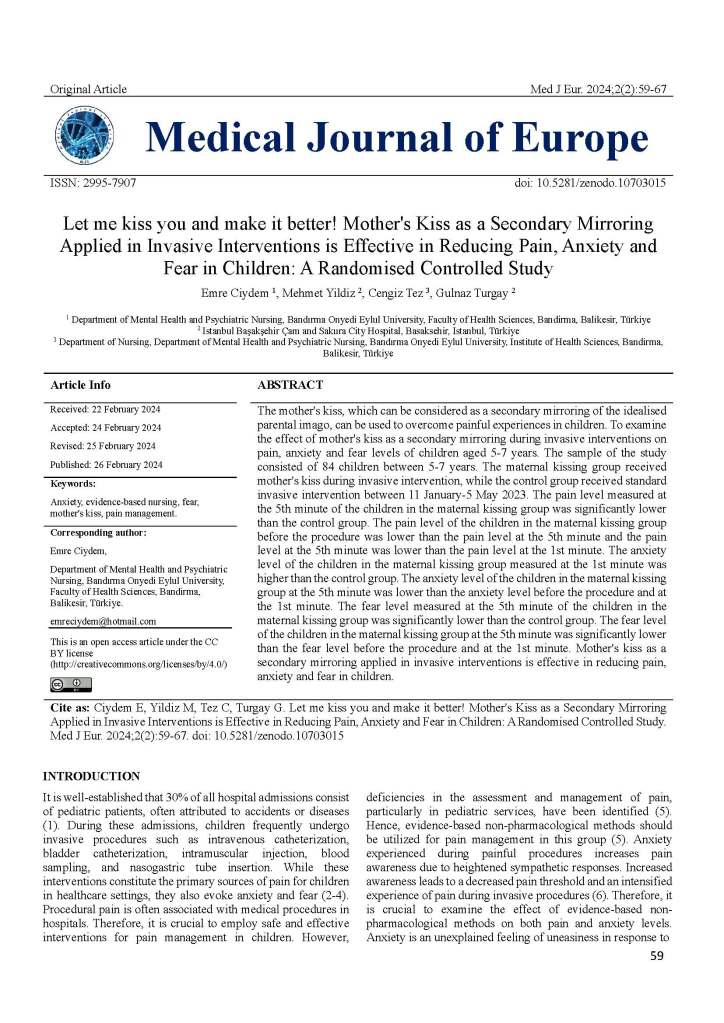
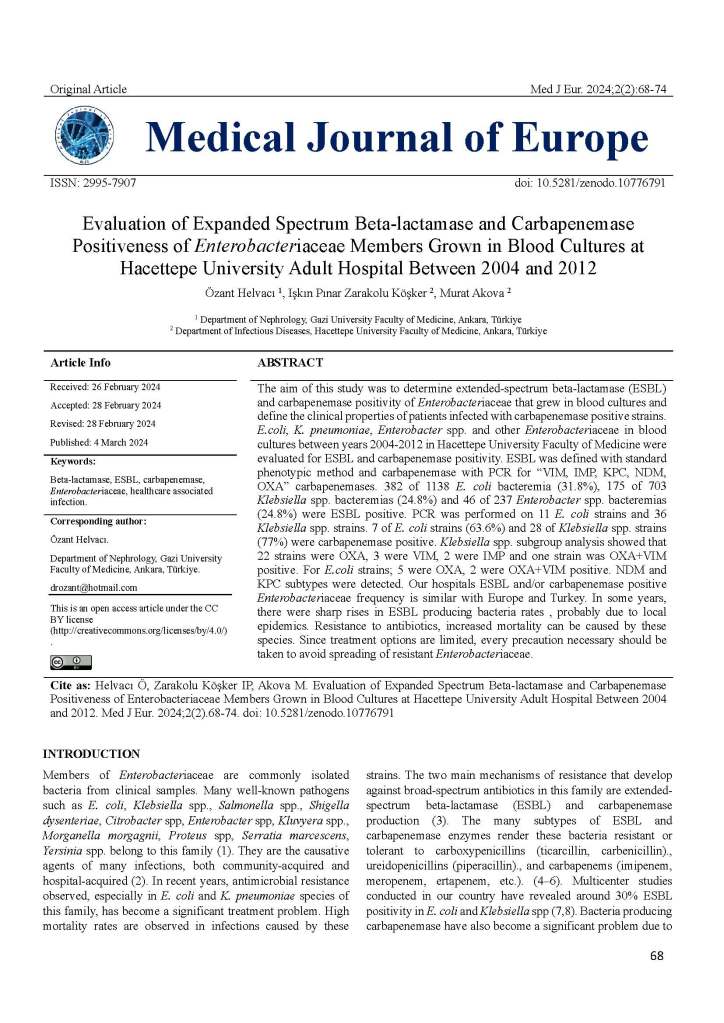
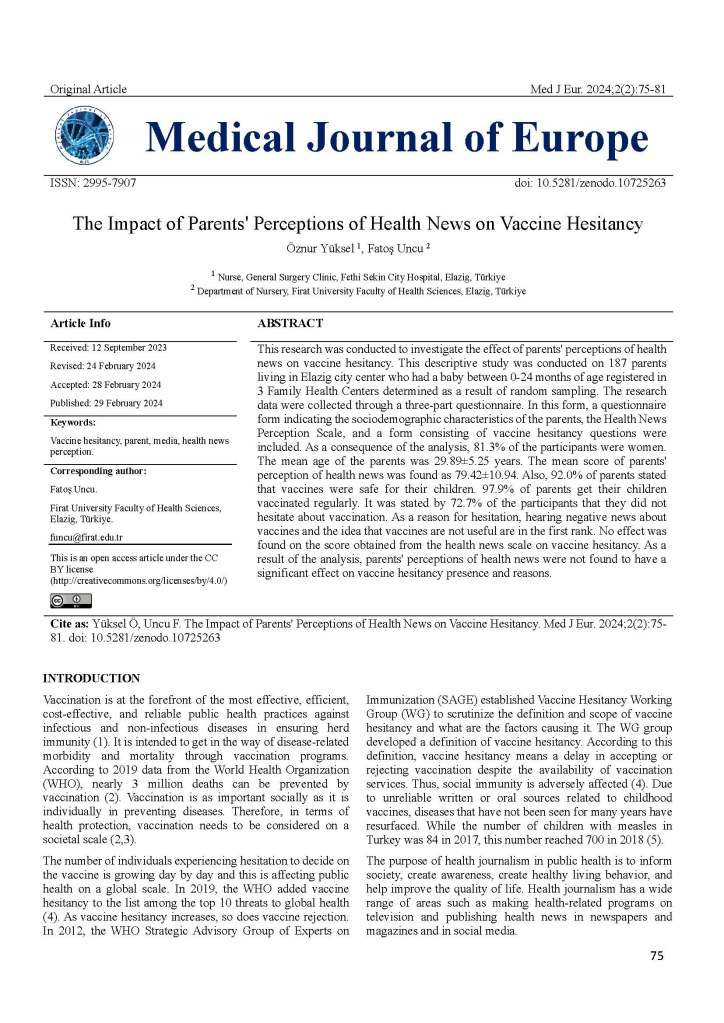
DOI number is given to each paper once published
Fast track process!
We complete the evaluation process of your article, and PUBLISH it within just 3 days!
or
Just send your paper to:
Medical Journal of Europe is published quarterly.
Only for medical professionals
We accept every type of medical publications such as original article, review, systematic review, meta analysis, letter to editor, case report, etc.
We accept articles in English or Portuguese (with an English abstract that can be translated by Google Translate by you or us).
We accept articles from all health sciences (Medicine, dentistry, veterinary medicine, pharmacy, nursing, etc.)
We accept from all medical staff including students.
No worries about the reference style, our editors make the arrangements.
No worries about the formal stuff, just send the paper and relax, Our editors are online for help 24/7 .

INDEXES
Medical Journal of Europe (and/or its content) is indexed (or listed) in:









Note: Medical Journal of Europe is NOT indexed by Scopus, so it’s not in any of the quartiles for now. And the journal is not in coverage of Science Citation Index (SCI) for now. We are working on it.
Updates History
UPDATE: Our depository politics is growing up. All article files (PDFs) published in our journal are stored at CERN (Zenodo.org) and INTERNET ARCHIVE (archive.org) meaning that your papers will be available forever!
BLOG
Navigating the Medical Maze: Your Guide to Medical Journals and Research
The world of medicine is constantly evolving, with new research, innovations, and debates emerging all the time. For healthcare professionals and anyone with a keen interest in health, staying informed can feel overwhelming. This is where medical journals come in, serving as a valuable resource for navigating the complex landscape of medical knowledge.
Peer-reviewed research, published in medical scholarly journals like The New England Journal of Medicine or JAMA, forms the backbone of evidence-based medicine. These journals meticulously scrutinize submitted medical research papers, ensuring the published clinical studies and healthcare publications adhere to rigorous scientific standards. This robust process allows healthcare professionals to make disease management decisions grounded in medicine research findings, ultimately improving patient care.
Academic medicine, encompassing universities and research institutions, plays a crucial role in driving biomedical research. Public health journals address broader population health concerns and healthcare trends, while diagnostic imaging studies contribute to more precise diagnoses. Additionally, medical case reports and case presentations offer valuable insights into unique patient experiences, fostering continuous learning and improvement.
Beyond research, medical journals serve as platforms for professional medical writing and physician education. Review articles synthesize and analyze existing research, providing a comprehensive overview on specific topics. Health policy papers delve into ethical and legal aspects of healthcare, while articles on emerging medical technologies keep readers abreast of the latest advancements.
Dentistry, veterinary medicine, and other health-related fields also benefit from dedicated medical journals, fostering knowledge exchange and collaboration across disciplines.
Finding the right resources is key to staying informed. PubMed, a free search engine from the National Institutes of Health, allows you to search millions of medical literature citations, while the Science Citation Index tracks the impact of research publications. Additionally, many medical journals offer open-access options, making valuable health sciences articles more readily available.
Remember, critical thinking is crucial when consuming medical information. Not all sources are created equal, and it’s important to evaluate the credibility and potential biases of the information presented. By using medical journals responsibly, you can become a more empowered patient, healthcare professional, or simply someone with a deeper understanding of the fascinating world of medicine.
This work is licensed under Attribution 4.0 International. To view a copy of this license, visit http://creativecommons.org/licenses/by/4.0/

Virginia / USA 22032
Publisher: Wepgo LLC
 Medical Journal of Europe